
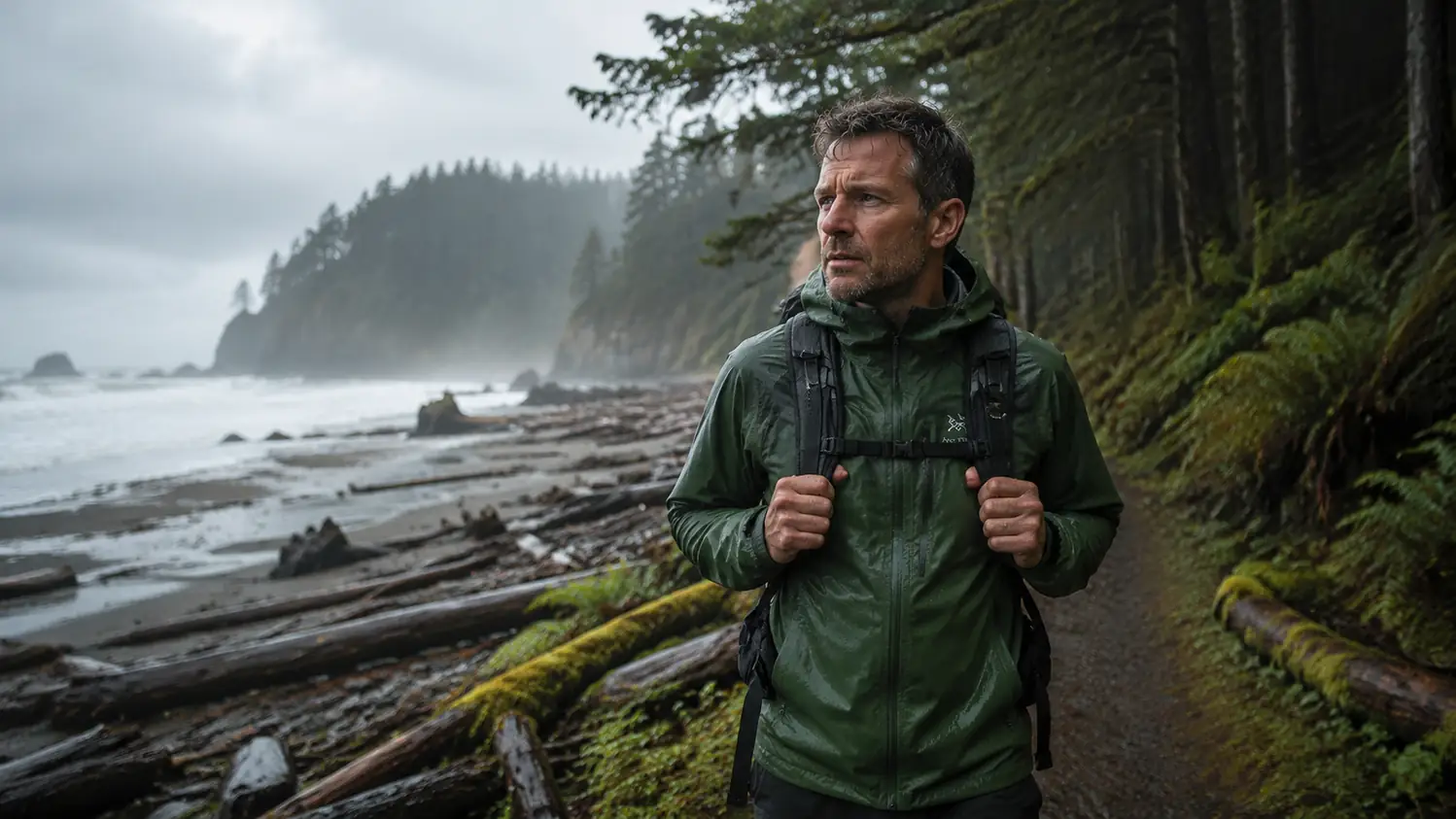
The morning started with the usual sound. The soft drum of rain on the windbreak, then across the shoulders of my jacket, and then, before I had poured a second cup of coffee, the cold prickle of wet working through at the seams. I was on the Olympic coast, four miles down a beach that would not dry out until July, and I was damp before the sun came up.
I can name every cheap jacket that got me there. The packable from the big box store that soaked through between the shoulders like a paper towel. The fashion shell I bought in Seattle and wore out of pure denial. The one with the broken zipper I kept swearing I would patch in the spring. Each one taught me the same lesson a little harder. Rain in the Pacific Northwest does not care about your budget or your plans. It only cares whether the fabric behind that zipper is actually sealed. And the name that kept coming up, on trailheads and around camp stoves, was the Marmot Precip Eco.
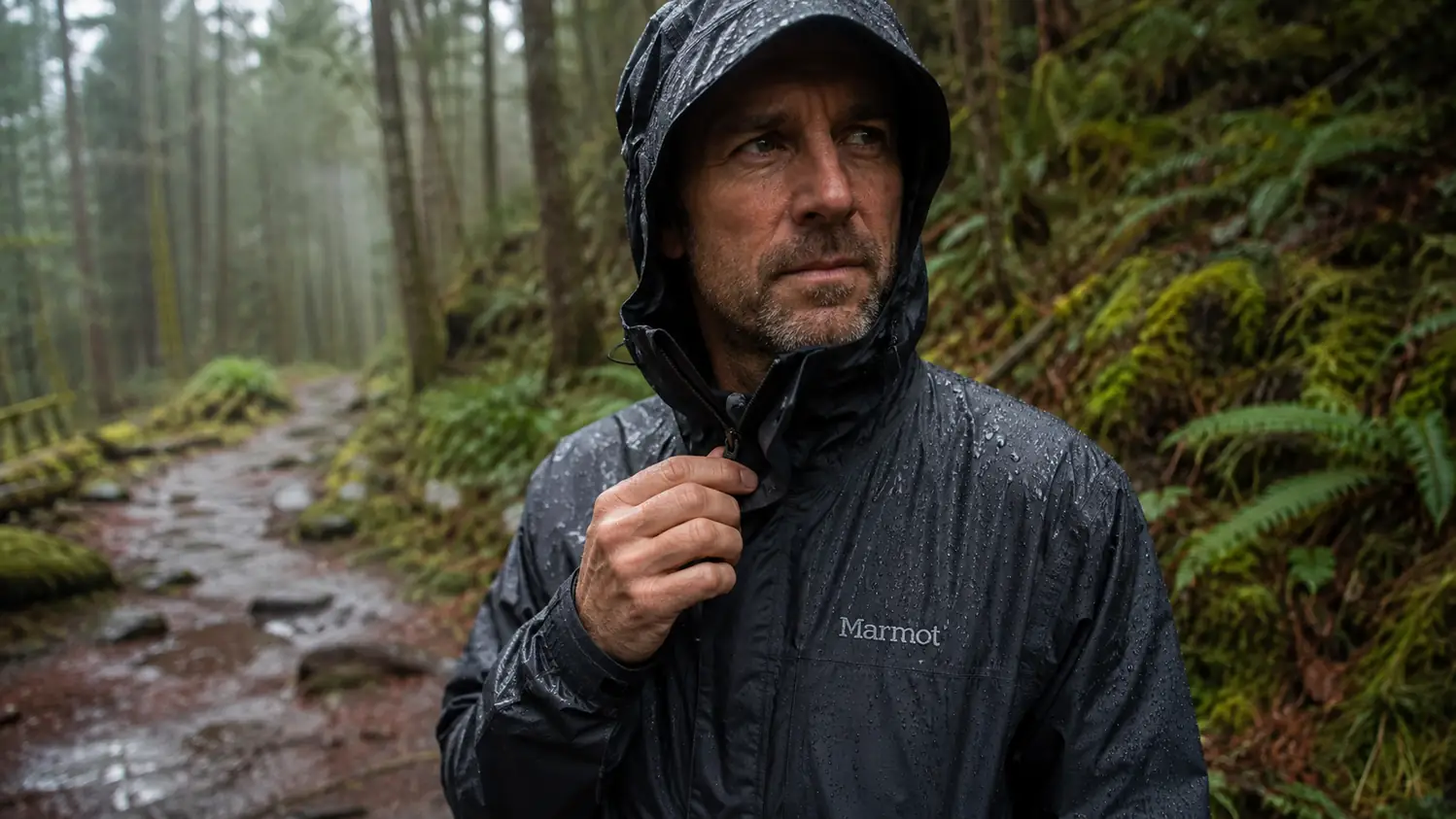
So I stopped buying on price alone and started paying attention to what people who spend whole wet seasons outside actually reach for. And the same name kept coming up, the way a name comes up when a piece of gear has simply worked long enough that nobody argues about it anymore. It never came up loud. It just came up, over and over, until eventually I stopped resisting it. That is a long way of saying I finally bought a real hardshell. And honestly, it changed my mornings more than I expected it to.
The first hike in the Precip Eco, I did something I never did with the old jackets. I stopped mid-trail on a ridge in steady drizzle and just stood there for a minute. Not to catch my breath, not to check a map. I stood there waiting for the cold to find me, the way it always had, and it did not come. The shoulders stayed warm and dry. The rain beaded and rolled off the shell like it had somewhere better to be. I remember saying out loud to nobody, well, there it is.
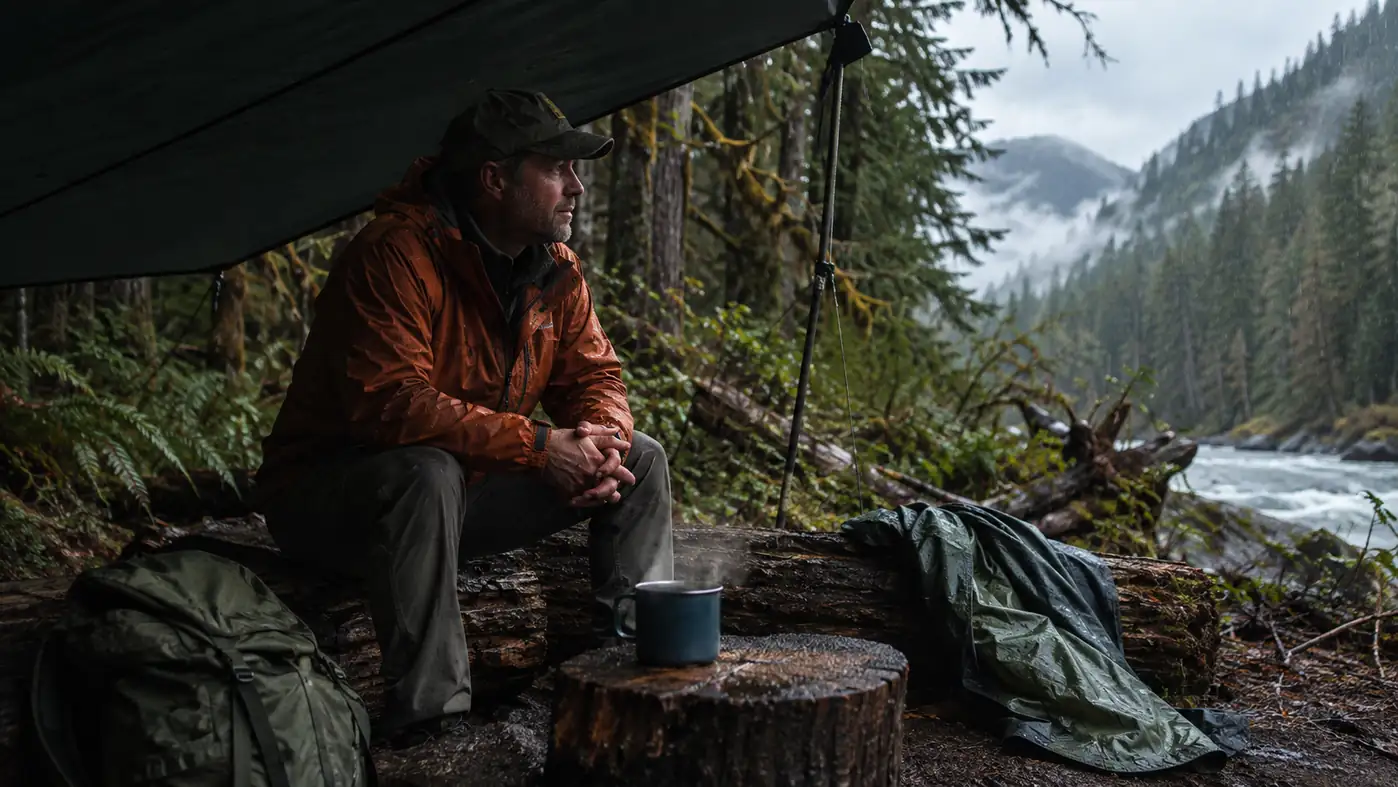
The part I did not expect was how much I used it beyond downpours. I am not one of those people who runs into the weather bragging about it. I am the guy who checks the radar twice and still packs the rain shell. But the Precip Eco is light enough that it rode in the daypack on every clear morning too, folded down smaller than my lunch. Which meant that when a squall rolled in off the coast at two in the afternoon, I was the only dry jacket on the beach instead of the soggy one pretending the drizzle did not matter.
It ended the one thing every cheap jacket I owned had taught me to accept: the cold, wet surprise at the shoulders an hour into the day.
If your mornings start with a damp shoulder too, this is the hardshell I finally stopped arguing with.
The Marmot Precip Eco packs small, breaks no bank for a real rain shell, and keeps the weather where it belongs. It ended my mornings of cold shoulders. That is worth a closer look if you spend any time in Pacific Northwest rain.
Amazon Check Today's Price on Amazon →It is not magic, and I will not pretend it is. It breathes about as well as any waterproof shell breathes, which is to say I still open the pit zips on a hard climb. And after a season of rain, I give it a rinse and a fresh DWR coating the way you would oil a good tool, because that is what it is. But the difference between this and the cheap stuff is not subtle. The cheap stuff failed on me in real weather. This one has not, through a season of coast drizzle and Cascade downpours. That is the Marmot difference, and it is a real one.
Three weeks in, I noticed I had stopped doing all the little rituals that used to mark a wet morning. The extra hooded layer under the shell. The careful seat to keep the damp patch off the car seat. The mental accounting of how many dry hours I had left before the shoulders went cold again. Those had quietly disappeared. I just pulled the hood up, walked out into the gray, and went about my day like it was nothing, because for the first time in years it actually was nothing.
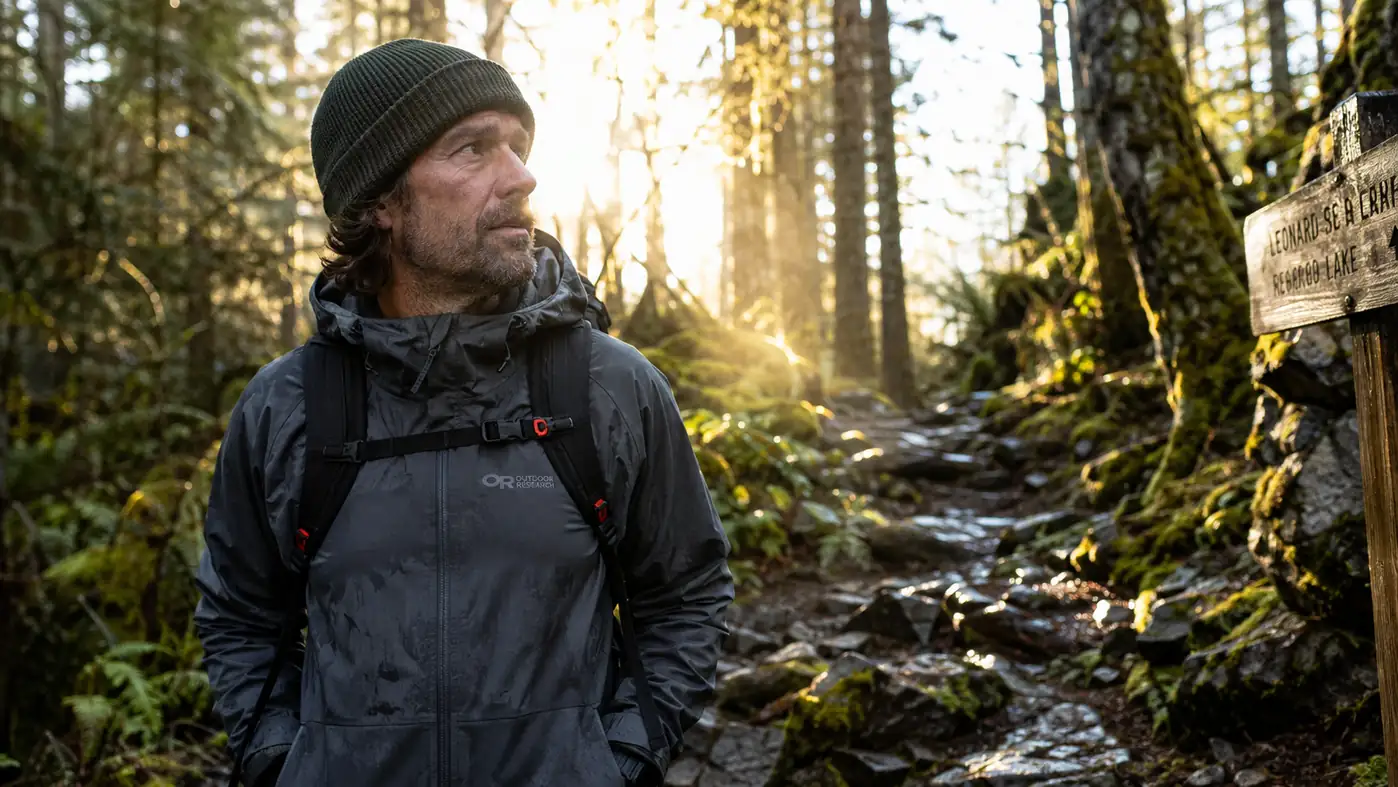
Somewhere around the middle of the season, the jacket stopped being gear and just folded into the routine, the way a broken-in pair of boots does. I stopped noticing it was there, which is the highest compliment a rain shell gets in this part of the country. Nobody buys a hardshell to admire it in a mirror. You buy it so the rain stops being a decision you have to make every single morning, and that is exactly what happened.
A good rain shell will not make you choose harder trails or better fishing days. It will not turn a six-mile beach slog into a sunny stroll. It will just make the days you already picked not start on a soaked baseline. That is the whole story. I waited years to learn how much of the misery was the jacket and how little of it was the rain. The mornings got easier not because the weather changed, but because the thing between me and it finally worked.
What I'd Tell You If We Were Sitting at My Kitchen Table
If you live where the weather is gray for months, stop buying rain gear the way you buy a t-shirt. Buy it the way you buy a good frying pan. Once, for real. I spent more money, added up, on cheap shells that failed me than one dependable hardshell ever cost, and I woke up with a damp shoulder every morning doing it. If I had put that same money toward one real jacket years ago, I would have saved both the cash and the misery. I would not have said this on day one, but I am glad I let the Marmot Precip Eco be the one that finally taught me that lesson.
Start your mornings on the dry side, the way I finally did.
The Marmot Precip Eco has earned its place in my daypack for a full season of Pacific Northwest weather. If the damp shoulder sounds familiar, this is the hardshell worth your money. Head to Amazon and check today's price before the season gets wet again.
Amazon Check Today's Price on Amazon →