
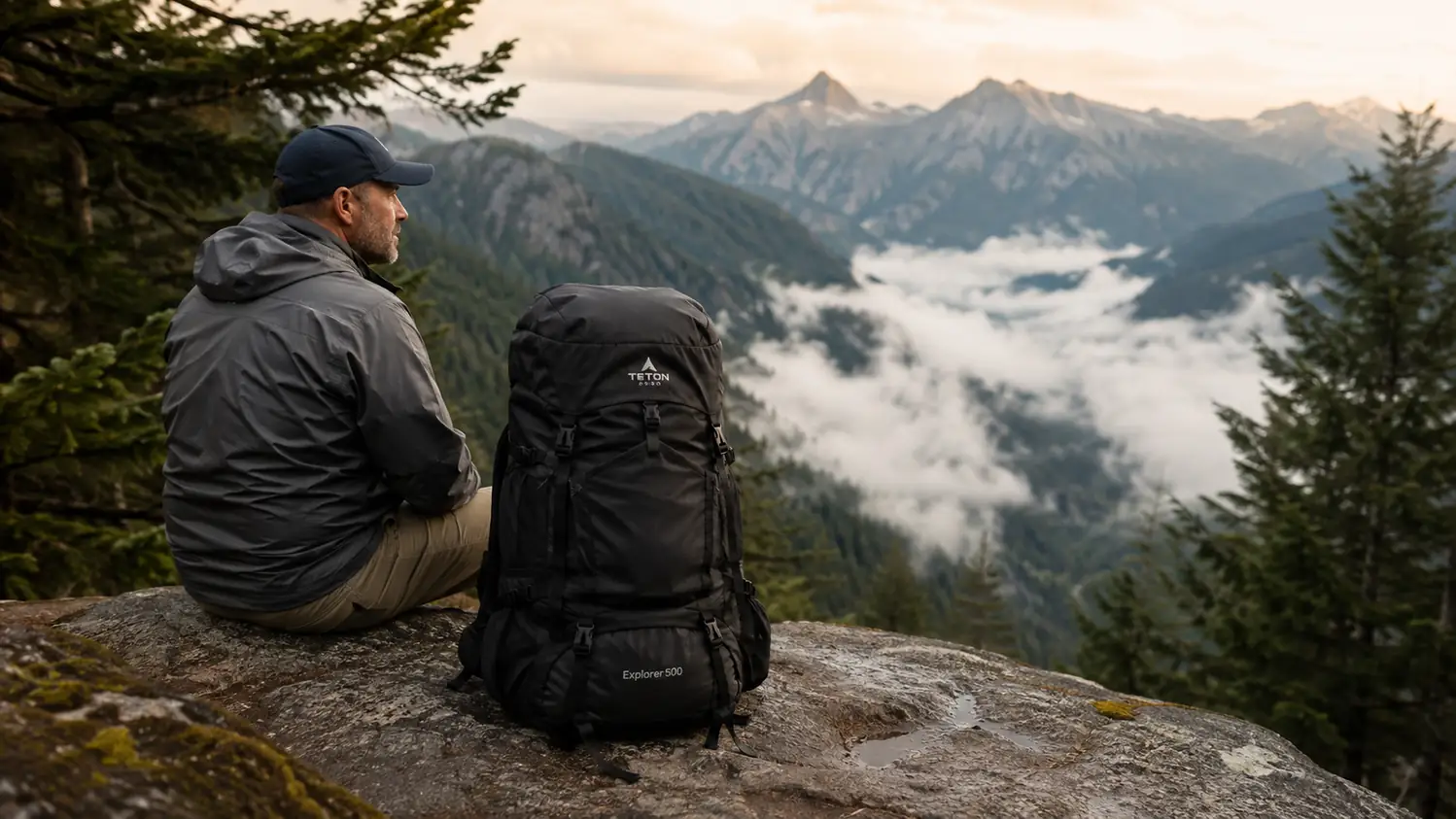
If you are shopping for a 45 to 50 liter pack on a budget, you have probably stared at the same two boxes for a week, the Loowoko 50L and the Teton Numa. Both hover near the same price, both ship with a rain cover, and both look ready to swallow a weekend's worth of gear the moment you take them out of the box. I spent a full season hauling each one over Cascade passes, into the Olympic coast fog, and through two nights of steady rain near Lake Quinault just to learn which pack talks a good game and which one actually carries the load. This is less a spec sheet and more a field diary, with the sore hips and wet socks included.
Here is the short version, and I will not hide it under a pile of caveats. For the weekend backpacker who hikes trails with a real overnight load and weather that turns wet without warning, the Loowoko 50L is the easier recommendation. It has a better hip belt, a more honest rain cover, and it transfers weight to your hips instead of letting it sag down onto your shoulders. The Teton Numa is lighter and more nimble on open ground with a modest load, and it makes sense if you want one pack to double as a roomy daypack and a light overnighter. But when I packed both for the same weekend and let the trail decide, the Loowoko carried better on every mile that mattered.
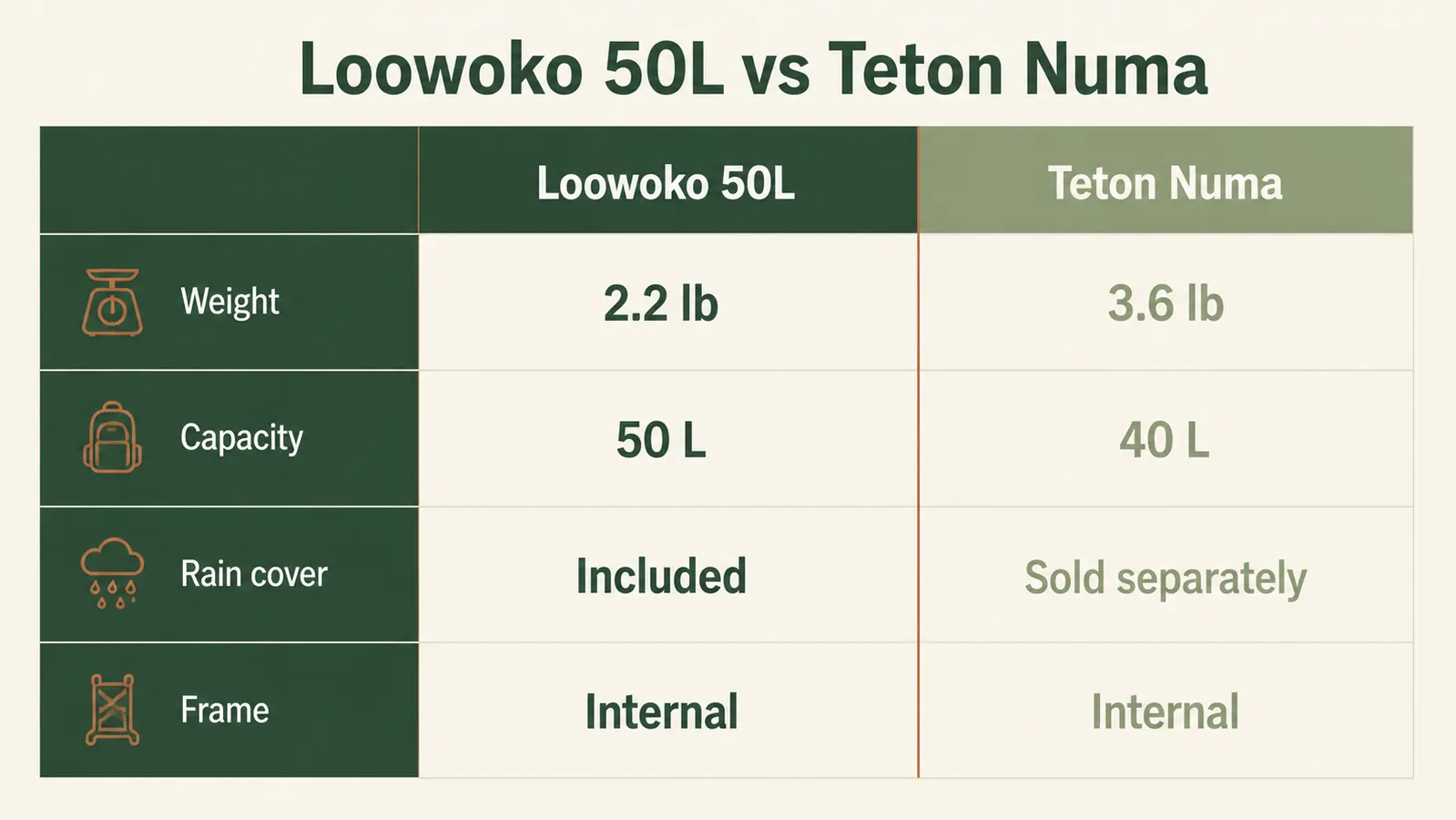
| Loowoko 50L | Teton Numa | |
|---|---|---|
| Capacity | 50L main, plus top lid | 46L main, plus lid |
| Frame | Internal aluminum stays | Internal stays (plasticky feel) |
| Hip belt | Thick, adjustable, padded | Thinner, less padding |
| Rain cover | Dedicated, well-fitted, stows in base | Thin, looser fit |
| Weight (empty) | About 3.6 lb | About 3.1 lb |
| Suspension feel | Load rides high on hips | Load sits lower, more shoulder pressure |
| Best for | Weekend trips, cloudy/mild trails | Lighter loads, open trails, day-plus trips |
Where the Loowoko 50L Wins
The hip belt is the whole story, and it starts the moment you cinch it down. On a full weekend load, right around 28 to 30 pounds, the Loowoko 50L settles that weight onto my hip bones in a way the Numa simply does not. The belt is thicker, it pulls in tighter around the crest of the hip, and there is enough foam that a three-hour carry out of the Enchantments left me feeling normal instead of bruised. That is the difference between a pack you forget you are wearing and a pack you are negotiating with by mile two. I brought it up with a friend who guides overnighters up here, and she said the same thing the moment she lifted it onto her own hips. By the third day of a trip, my hips were still my hips, and that alone swung a lot of the decision.
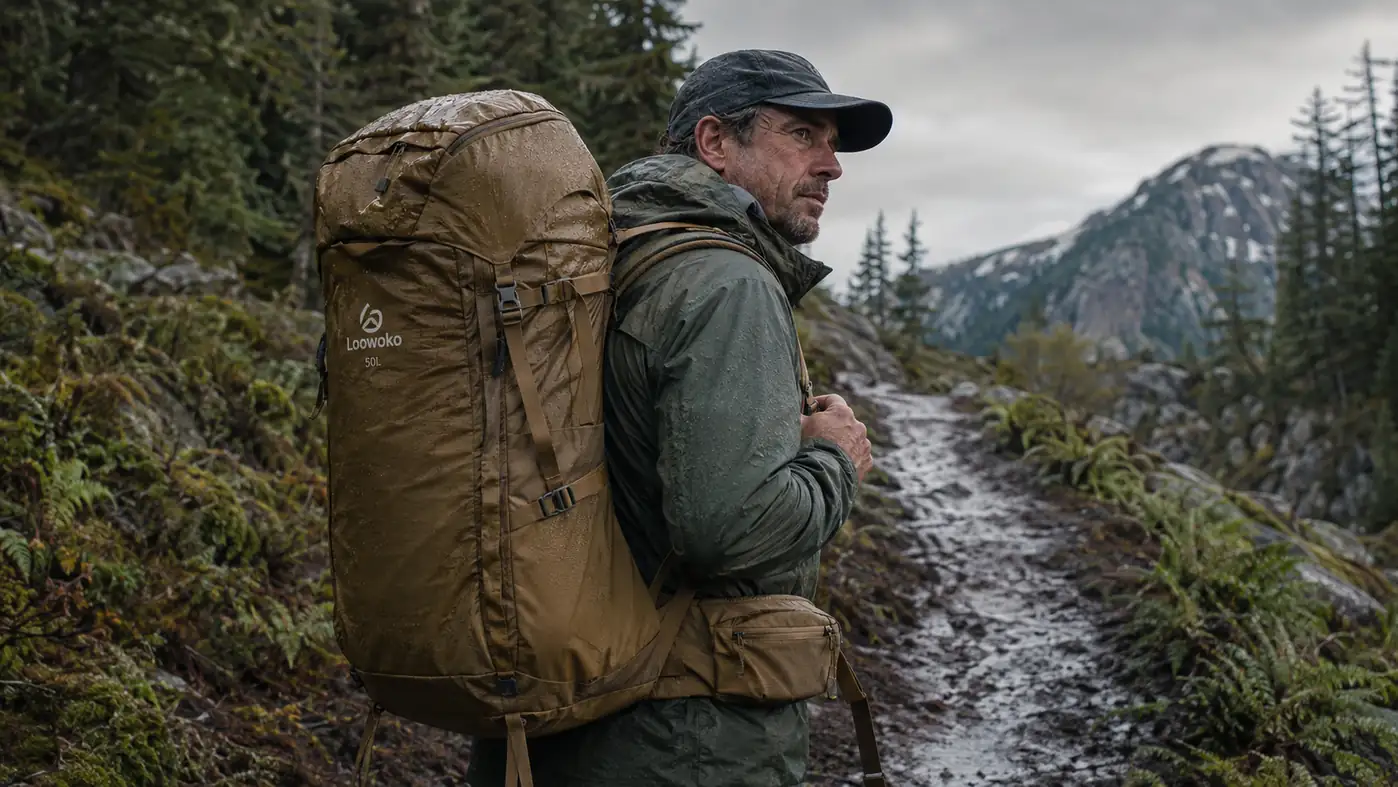
The rain cover is the second reason I reached for this pack on wet weekends. It has its own stow pocket sewn into the base, so it is always with the pack and never left behind in a dry bag at home, and it fits snug enough that a gusty crossing at Cape Alava did not balloon it up or let a stream run down my spine. On a twelve-mile day with the load climbing toward thirty pounds, I could feel the frame holding the top of the pack against my upper back instead of leaning back off my shoulders. That steady transfer, plus a cover that actually covers, makes it the drier and more comfortable pack of the two for the Pacific Northwest. It is not a flashy feature, but the weather up here does not reward flashy.
Where the Teton Numa Wins
The Numa is a lighter, leaner pack, and you feel it on the scale and on easy trail. Empty, it runs about half a pound less than the Loowoko, and it carries that lighter feel through the day. On a day trip to a mountain lake, or a one-night overnighter where you keep the load in the low twenties, the Numa feels nimble and plenty comfortable. It also has a layout some hikers genuinely prefer, with pocketing arranged up top that is quicker to reach without taking the pack all the way off. For the hiker who does most of their miles on well-drained, open trail in fair weather, that lighter carry is a real, measurable advantage that shows up hour after hour.
It is the better pick if you want a single pack to do double duty as a roomy daypack and a light overnighter rather than a dedicated full-weekend hauler. Push a genuine three-day load into it, though, and the thinner hip belt and the lower-sitting suspension start handing pressure back to your shoulders by the second afternoon. It is a fine pack for light duty, and an honest light load is exactly where it belongs. The moment you ask it to carry a real weekend in wet weather, the trade-offs stop being worth it and the Loowoko pulls ahead. I would not call the Numa a bad pack, I would call it a pack with a clear lane.
The pack that finally stopped dumping weight on my shoulders
After a season of carrying both, the Loowoko 50L is the one I load first for a weekend. If you want the hip belt that actually carries, check today's price on Amazon before you settle for a lighter but shoulder-heavy alternative.
Amazon Check Today's Price on Amazon →How Each One Carried a 12-Mile Day
Ask me which pack I wanted on the morning I had twelve miles and about four thousand feet of climbing in front of me, and the answer was the Loowoko every time. The reason is the frame. The aluminum stays in the Loowoko hold the load high and close, so the weight sits over my hips and stays put even when I am leaning into a steep grade. I made a point of carrying the same thirty-pound load in each pack over the same loop, and the Loowoko left my shoulders almost free while the Numa slid just enough that I was constantly re-hitching the straps between switchbacks. That difference is hard to capture in a photo, but it is impossible to miss on a trail.
That is not a small thing on a long day. A pack that shifts even an inch an hour turns into sore deltoids and a tired neck by late afternoon, and the Numa did exactly that on the descent. The Loowoko held its line, which meant I was thinking about the ridge, the light, and the next water source instead of the pack. Call it boring, call it unglamorous, but on a twelve-mile day boring and stable is exactly what I want. That is how a heavier pack can still win the day, because how the weight sits matters more than the pound or two you saved on the bathroom scale at home.
The Rain Cover, the Hydration Sleeve, and a Wet Afternoon
The hydration sleeve is one of those quiet details that only matters when it stops working, and the Loowoko got it right. My two-liter bladder rides in a dedicated sleeve against my back, and even after hours of rain the reservoir stayed dry and the tube stayed clear of the main opening. I packed the Numa the same way on the same kind of afternoon and had to stop twice to dig the tube free of a wet tangle. It is not a headline feature, but when you are cold and the rain has set in, not having to fight your own water is worth more than it sounds on paper. On the coast last fall, that small win kept me walking instead of fumbling.
Neither pack is actually waterproof, and it is worth being honest about that. The rain cover keeps the bulk of a downpour off, but a full afternoon of horizontal rain will find its way into seams and zipper ends on both of them. What separated them was the cover itself. The Loowoko's cover is cut to the pack and stows in its own dedicated pocket, so it stayed put in wind and actually shed water. The Numa's cover is thinner and looser, and it lifted in a gust on the coast and let a stripe of the shoulder straps soak through. For a region where the rain comes sideways, that difference is the difference between a dry shirt and a cold one.
What Survived the Abuse
I did not baby either pack, and a brushy side trail early in the season put the side mesh pockets through the ringer. The Loowoko's mesh stretched but held, even after I shoved a wet tent footprint and a fuel canister in and out of it repeatedly and then snagged it on a salmonberry thicket. The Numa's front and side mesh came through with a small tear after the same kind of trail, which is the sort of thing you do not notice until the wrong thing slips out somewhere you cannot easily retrieve it. On a pack meant for the bushwhacking brush of the Northwest, that durability is not vanity, it is function.
The zippers deserve a mention too. Two seasons of mud, beach sand, and rain worked their way into both packs, and the Loowoko's main and side zippers never bound, skipped, or split. The Numa's were fine on the trail but started to feel grindy after the coastal sand got into them during a rough weekend. Neither pack is built like a four-hundred-dollar mountaineering rig, and neither should pretend to be. But within the honest budget class, the Loowoko handled the rough edges of real use with noticeably fewer complaints, and that is what keeps me reaching for it when the forecast is uncertain.
On a twelve-mile day, how the weight sits on your hips matters more than the pound or two you saved at the scale.
Weekend Hauler or Daypack Plus?
Before you buy either, ask yourself what your weekend actually looks like. If you are walking out of a trailhead most Fridays with a tent, a sleeping bag, food for three days, and a change of dry clothes, that is a thirty-pound load and it wants a proper hauler. That is the Loowoko's home turf, and it shows. If your weekend is more of a Saturday afternoon lake hike with an occasional overnight, you are living in the low twenties and a lighter pack like the Numa will serve you without complaint. Choosing the wrong one for your real routine is how you end up with a pack that fights you, and ninety percent of the disappointment I have seen comes from that mismatch.
Who Should Buy Which
Buy the Loowoko 50L if you want one pack you can trust for genuine weekend trips, overnights with a real load, or anywhere the weather is likely to turn. That thick hip belt, the frame that holds the load high, and the dependable rain cover make it the more forgiving pack for the Pacific Northwest, and it carries its size well under weight. Its honest downsides are the extra half pound on the scale and a slightly bulkier profile when you are trying to travel light. If you spend most weekends camped and covering real miles, accept the weight and take the carry. That is the trade I made, and I have not regretted it once.
Buy the Teton Numa if what you actually do is day trips and easy overnights on open, well-drained trail with a light load. If most of your trips are sunny afternoon hikes with the occasional one-nighter, going with the Numa saves you weight without much penalty, and its lighter feel on easy ground is genuine. But be clear-eyed about what it is for. If most of your trips are full weekends in real weather with a thirty-pound pack, the Numa will hand that weight to your shoulders and the thin cover will let the rain in. That is the honest split, and the choice comes down to which kind of hiker you actually are, not the one you wish you were.
A Note on Fit for Shorter and Longer Torsos
Fit is worth its own paragraph because neither pack comes in a true women's-specific cut. The torso length on the Loowoko adjusts, and the hip belt cinches well into a smaller frame, which is why my wife grabbed it for a shoulder-season trip and came away comfortable. The Numa's belt runs a little wider and sits lower, and on a shorter torso it pushed onto the hip bone rather than riding the crest where it belongs. If you are shopping for a smaller or a longer torso, lean toward the Loowoko for the adjustable torso, and if you can try either one on with a load before you trust it, do that. A pack that does not fit is a pack you will quietly resent for years.
My weekend pack, after a season of carrying both
For breakable, rainy, real-world weekends I carried the Loowoko 50L and it carried me. If you want the hip belt and rain protection that held up, that is the one I would buy today.
Amazon See the Loowoko 50L on Amazon →